by Eddie Pipkin
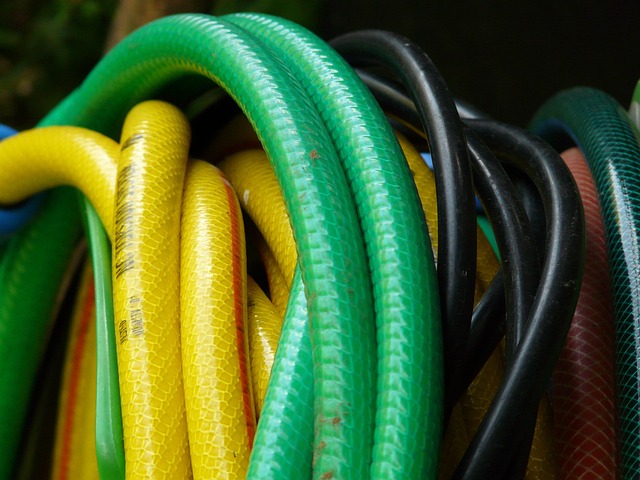
I wrote a blog a couple of years ago titled “Kinks.” Not the pulp paperback variety; the kind you get in your garden hose. My whole meditation was about my frustration with dragging the hose all the way across the yard only to have a frustrating, water-clamping crimp in the hose 30 yards away. Ministry can be like that I said, but there are ways to avoid kinks in your hose and in your ministry. Among other ideas, I got really, really excited about videos I’d seen demonstrating how to store a hose in alternating loops the way the Navy does. Lifechanging, I said! Only, it turns out, in the long run, I was wrong. What apparently works for the Navy did not work out for lil’ ol’ me, and therein, lies a new blog.
This is not to knock the Navy’s preferred technique for reverse looping hoses and ropes as they are stored (one clockwise loop, then one counterclockwise loop, repeat). It is a marked improvement over one’s normal flat surface hose storage technique of loops that all go the same direction. You will get less kinks with counterprogrammed loops. But, if you’re like me and use inexpensive garden hoses, you’ll still get kinks. (By the way, just for reference, here’s my original blog on this topic.)
That’s the key point: know what works in your specific context. Test all the ideas you can test and see what actually works for you.
In the ministry world, an idea that worked great for some mega-church in some faraway city may be the wrong solution for you. Just because an influencer with a super cool video pitches a model doesn’t mean you should contort your preferences and personality just to shoehorn it into your situation.
Not to nerd out too much on hose coiling – although the principles apply to any day-to-day chore you are facing from cleaning the shower to storing extension cords – there will always be an expert with the “perfect hack” – but in the original blog I wrote on the irritating prevalence of recurring kinks, there were multiple strategies suggested for dealing with this issue, including investing in robust, professional hoses, buying well-engineered, dedicated hose storage systems, and other schemes that primarily involved spending money to get a solution.
For the frugal, who work in an environment in which aesthetics are not the dominant decision-making factor, the over-under looping technique seemed like the solution. Except in practice, that method had two major flaws for me:
- I still got kinks!!!
- It was a real hassle trying to force the hose to submit to my directional looping.
The hose got kinks arguably because I buy, if not the cheapest garden equipment, I was trying to find the sweet spot between good enough and cheap enough. I’m trying to conserve my resources by buying the minimal product I can buy that serves my purpose. That’s just good stewardship! Buy an expensive hose, and you can store it in tight omnidirectional coils, saving yourself time and frustration, because it turns out that the physics of hoses means that they will fervently resist your counterlooping technique. (You may think I am anthropomorphizing my garden hose, giving it a personality and will of its own, but if you have wrestled with one on a hot day, you will know that I am not exaggerating; it fights back, with attitude.)
Back to what this means for church life (or decision making in aspect of life, really).
Know your context. Be realistic about your situation and what will work in that situation or not. This is not merely a logical solution. You and the people you work with have feelings and habits and preferences and anxieties. If you are making a decision / proposing a solution / choosing a strategy / selecting a program that contradicts those feelings, habits, preferences, and anxieties, and there is not a compelling reason to endure such pain, the thing won’t work over the long term, or it will technically work, but everybody that is involved will be miserable.
Miserable = Spending a bunch of money to solve a problem and then worrying about all the money you spent (sometimes to not even fully solve the problem).
Miserable = Selecting a solution that works intermittently but still fails frustratingly often.
Miserable = Selecting a solution that works but is no fun for anybody, that is soul killing in its execution.
Don’t be miserable. Try out ideas, but give yourself grace and a trial period to evaluate how well they are working. Always think of a new strategy as an experiment (and this is an arguing for always trying the least expensive option first before laying out large expenditures, because spending a lot of money up front on “the next new thing” leads directly to the trap of the sunk cost fallacy).
In my case, in the saga of the kinking hoses, what is working is a figure-eight coiling method with large loose coils, spread out on the ground. (And, of course, the Internet being the home of all ideas, everywhere, once you have theory, there’s a site to reinforce your hypothesis.) My yard lends itself to this approach aesthetically. Also, the hose does not fight back with this method! In a moment of gratifying zen, if you let the hose sort of take the initiative and loop itself, this is the choice that the physics chooses, and while the unstretched-and-dragged-across-the-yard hose is not 100 percent kink free, it’s close if you’re careful and patient with your technique.
Taking a patient approach, being clear about what you are solving for, exploring the options, soliciting ideas and feedback, experimenting with what works in a real environment, and being careful and consistent in the application of the new strategies: these are techniques for leading change in any organization.
Give them a try for your next thorny challenge. And let me know how it went in the comments section! Godspeed, friends.




Leave A Comment
You must be logged in to post a comment.